Cognitive Science BSc — incoming Human Factors Engineering MSc @ TU Munich
Fit the system
to the person.
Hi I'm Kim, a cognitive scientist working where people and machines meet — studying how systems strain the people who use them.
Selected work 2024—2026
Three studies exploring human attention, cognitive limits, and information processing.
Studies
Bachelor's thesis · HCI × machine learning · 2026
Iterative Optimization of
Joystick Transfer Functions
using Gaussian Processes
fig. 01 — fitts' law taskID —
How do you make a joystick feel right? Not by guessing. Gamepads control everything from drones to surgical tools, but the optimal settings differ for every hand. Instead of forcing users through trial and error, I built an intelligent system that automatically finds their ideal fit. The application measures a user's performance in real time and uses machine learning to dynamically recommend the best settings, delivering a personalized control experience in just a few steps.
Bachelor's at University of Tübingen · supervised by Prof. Dr. Niels Henze — my first interdisciplinary HCI study, half cognitive science, half machine learning.
01 — Measure
A Fitts' law tapping task in accordance with ISO 9241-9 turns "how it feels" into a single reward number.
02 — Propose
Monte-Carlo sampling proposes candidate parameter combinations, each scored by an upper confidence bound — the estimated effective throughput, balancing exploration and exploitation.
03 — Optimize
The top-scoring curve is applied every block, tightening the fit until the stick feels like it belongs to one hand.
About
Designing for the
human mind.
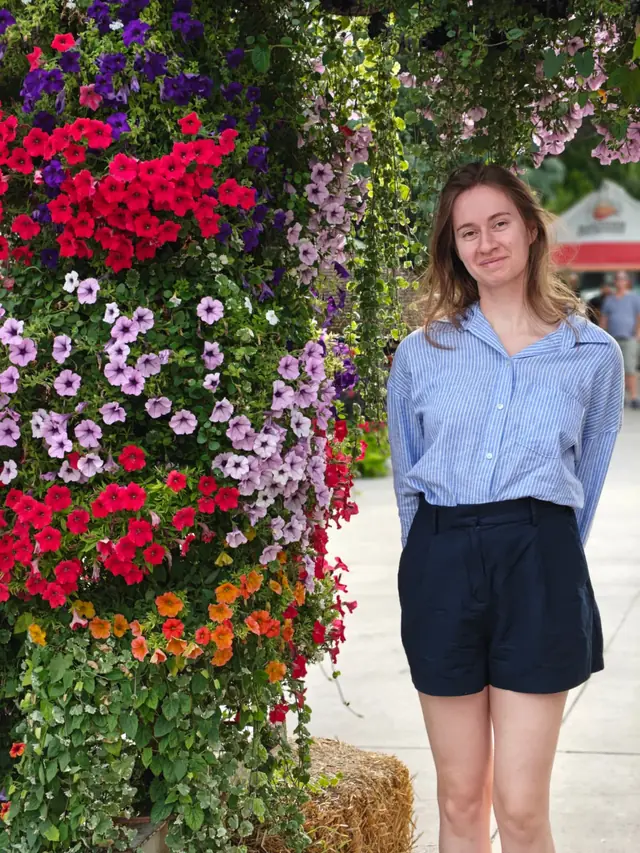
System development for physical products is where I want to work — cockpits, cars, industrial machines, control devices. I measure where a system strains the person using it, and make that strain visible so it can be designed out.
The way I work: watch how people actually use things, then design those things around the person instead of the other way around.
My goal: physical systems that fit the people who use them — where no one ends up feeling like the problem.
Timeline
Military service
Oct 2022 – Jun 2023
Bundeswehr · Air Force
BSc Cognitive Science
Oct 2023 – Sep 2026 (est.)
University of Tübingen
MSc Human Factors Engineering
From Oct 2026
TU Munich
Involvement
Student council
University of Tübingen · September 2025 – present
- Representing students at faculty meetings
- Coordinating academic events and mentoring programs
Skills
Research
cognitive task analysis statistic modeling data analysisDesign
prototyping sketching UX design FigmaAnalysis
statistics R research writing LaTeXTechnical
python pygame psychopy godotContact
Let's design the
human bit.
Whether you’d like to discuss research, collaborate on a project, or just say hello – my inbox is open.